
The belly button can make the difference between an abdomen that looks natural and one that looks visibly “operated on.” When a tummy tuck is carefully planned, the goal is not simply to remove excess skin and flatten the abdomen. The belly button occupies a central position and can become one of the most important details influencing the natural appearance of the final result.
A belly button that is too round, wide, shallow, high, or surrounded by a very noticeable scar can attract attention even when the rest of the abdominal contour looks harmonious. For this reason, umbilical design should never be considered a minor detail.
During a full tummy tuck, the abdominal skin is mobilized downward. The original belly button remains attached to its stalk and to the abdominal wall, while the surrounding skin changes position.
A new opening is then created in the abdominal skin through which the belly button is brought out.
The shape of this opening, the way the tissues are secured, and the distribution of tension all influence how the belly button will ultimately look.
There is no single “perfect” belly button shape.
In general, a harmonious belly button should integrate naturally with the length of the torso, the midline, and the individual anatomy of each patient. Depth, orientation, and internal shadow are important because they help avoid the appearance of a circle simply cut into the skin.
The goal is not to reproduce the same belly button in every patient. A patient with a short torso, another with a long abdomen, and another with more defined abdominal musculature should not necessarily receive exactly the same design.
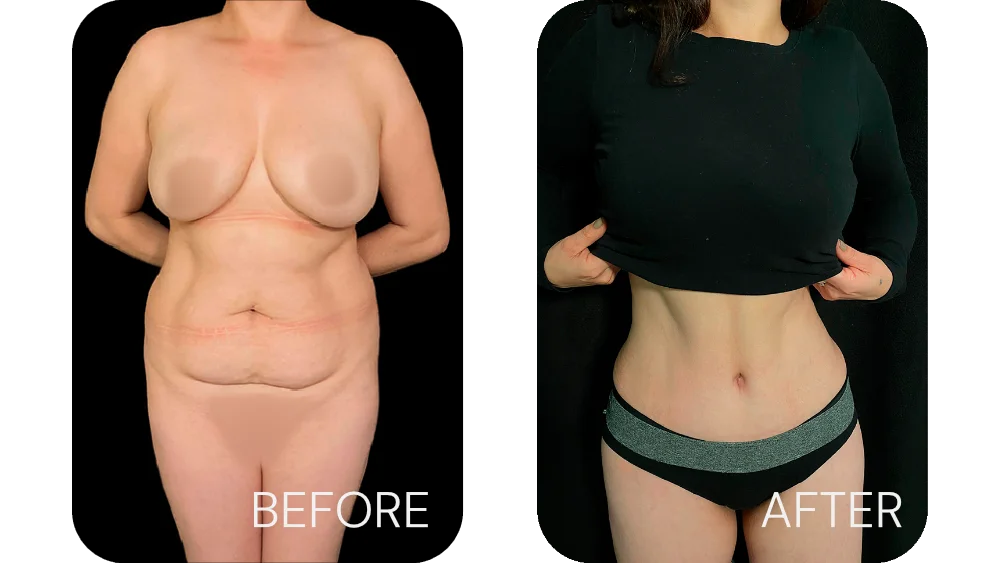
Many patients ask whether the scar around the belly button will be visible.
The final appearance of the scar depends on several factors, including surgical technique, tension, skin type, individual healing, and postoperative care. However, even a subtle scar may still look unnatural if the shape or position of the belly button does not fit the proportions of the abdomen.
For this reason, planning involves more than simply minimizing the scar. It combines shape, depth, position, transition with the surrounding skin, and scar management.
Neoumbilicoplasty is an approach to reconstructing or creating the belly button with the goal of reproducing an anatomical and harmonious appearance.
Dr. Felipe Amaya has developed and presented his Neoumbilicoplasty® technique at scientific plastic surgery meetings and incorporates it into the surgical planning of selected abdominal procedures.
In some cases, it may be possible to improve the shape, depth, scarring, or position of a previously operated belly button.
However, revision surgery has limitations. Previously operated tissue may present fibrosis, altered blood supply, or existing scars that can affect the available surgical options.
For this reason, an in-person evaluation is particularly important when considering revision surgery.
The Belly Button Should Not Be Planned at the End
At AmayaClinic, belly button design is considered part of the overall concept of a tummy tuck.
The goal is for the skin, waistline, abdominal wall, scar, and belly button to work together as a single harmonious result rather than as separate elements.
During a full tummy tuck, it is generally necessary to bring the existing belly button through a new opening in the repositioned abdominal skin.
In more limited procedures, such as certain mini tummy tucks, the approach may be different.
Yes. The goal of careful surgical planning is for the belly button to integrate naturally with the abdomen rather than becoming the feature that reveals that surgery was performed.
If you are considering a tummy tuck, make sure the belly button is part of the conversation during your consultation.
At AmayaClinic, Dr. Felipe Amaya can evaluate your anatomy and explain how he would plan this detail specifically for your case.
.